Design
We may have heard about or actively participate in virtual reality games. Have you ever wondered about the complexity and time it takes for the creation of VR games? It is estimated with a qualified development team a simple world can be created in as little as 4-10 weeks.
However, that depends on four main factors that could lead to variation of development time:
- The development of the flowchart and script
- The complexity of the modeling
- The intensity of the programming
- The level of expertise of developers
A simple VR game like Beat Sabre took two years to develop[1] to an early access release and another year to release generally.
Some of the key elements when creating a virtual reality game are interactivity, sensory feedback, immersion, and of course a virtual world concept. The developers make flowcharts to show a series of events when players interact with the world around them.
Most of the virtual reality games use program coding software as C+ on the Unity platform[2]. Unity is a game engine that was released by Apple Inc in 2005, and games created with it can go on multiple platforms. This platform can be used to make 2D, 3D and VR games.
Materials
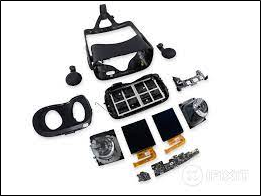
Let's briefly discuss how we actual build the hardware. From my research, the virtual reality head mounted displays (HMD) can be made from a variety of materials, ranging from cardboard and plastic squares to LCD screen glasses, a stereo, and head-motion tracking sensors.
As part of this research, I am using an iPhone SE and some cardboard to build my own headset. See Appendix A if you're interested.
One of the main reasons VR is so expensive is due to the number of things that the headset must handle. It must render 3D objects, play audio cues, and most importantly must be able to tell the angle and acceleration of the user. This advance hardware requires memory and CPU power that was not available until a few years ago. The technology is dropping in price now, as most modern cell phones have the components to make a VR headset with minimal modifications[3].
Senses
Virtual Reality is achieved by feeding our senses, especially our sight and hearing. A VR headset would cover our eyes and ears with new inputs. Our bodies are fooled when a head mounted display (HMD) is placed over our eyes and ears[4]. Some older systems cannot keep up with the refresh rate required to quickly move your head from left to right and continue to fool the eyes. When the inner ear detects motion that the eyes do not agree with this causes some people to become motion sick ("car sick") or dizzy.
Prolonged use of VR sets can cause eye strain and/or eye discomfort. It can also cause eye fatigue, blurriness, and permanent deterioration. Having a screen a few centimetres from your eyeballs for hours at a time is something that should be balanced by going outside and giving the eye various things to focus on at different distances.
The greatest danger with VR is being in the immersive world itself. If a user of virtual reality is not in a safe space to begin with there is a chance that the user could physically hurt themselves by tripping over a coffee table or swinging into a wall. As it can be difficult to tell what happens in the real world when the VR headset is on. People can sustain many injuries like broken bones if they were not previously aware of their surroundings. In addition to sustain injuries, the hardware might fail or break, which can cause electric shocks and/or cuts.
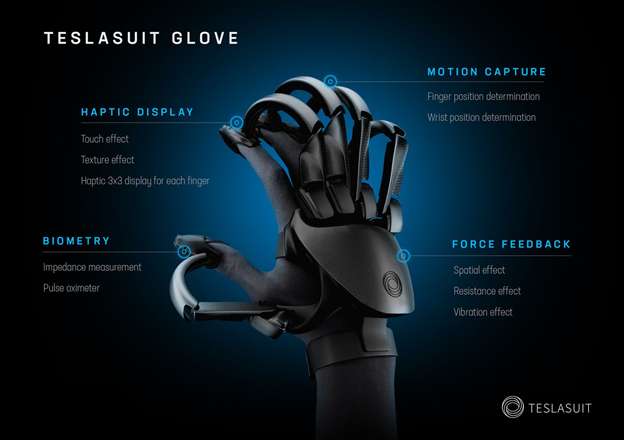
Virtual Reality started with an immersive vision experience. In modern times, headphones became a part to include auditory senses to be part of the immersive experience. The next sense that is being tackled is touch. Virtual reality gloves are not new, but they are not common[5]. Full virtual reality body suits are not here yet but if there becomes a need for them, they are possible.
The final two senses of taste and smell are not yet discussed in my Virtual Reality research.